
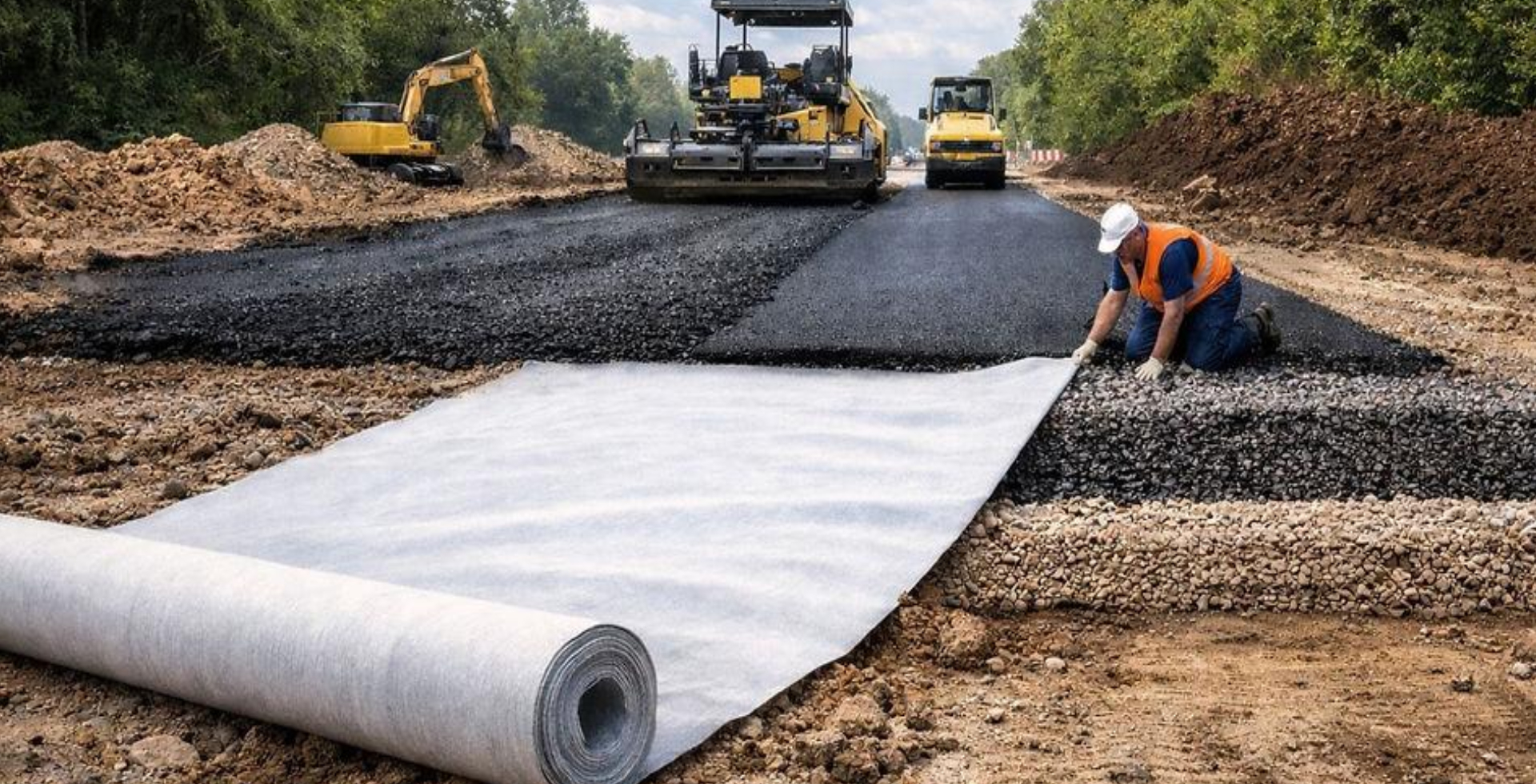
Road construction requires strong and durable materials to ensure long-term performance. Geotextiles in road construction are widely used to improve soil stability, drainage, filtration, and the overall performance of road structures.
Geotextiles are synthetic textile materials that are placed between soil and other construction materials. They are commonly used in highways, rural roads, access roads, and other civil engineering projects.
As an important category of geosynthetics, geotextiles provide several functions, including separation, filtration, drainage, reinforcement, and protection.
What Are Geotextiles?
Geotextiles are permeable synthetic fabrics generally manufactured from materials such as polypropylene or polyester. They are designed to work with soil, aggregate, and other geotechnical materials.
In road construction, geotextiles are often installed between the subgrade and aggregate layers. They help prevent the mixing of soil and aggregate while supporting drainage and improving the stability of the road structure.
To learn more about different geosynthetic materials, their types, and applications, read our main guide on Geosynthetics in Civil Engineering: Types, Benefits & Applications.
Types of Geotextiles
The most common types of geotextiles used in civil engineering include:
Woven Geotextiles
Woven geotextiles are made by interlacing synthetic yarns. They generally offer high tensile strength and are commonly used for separation and reinforcement applications.
Non-Woven Geotextiles
Non-woven geotextiles are manufactured by bonding or mechanically entangling synthetic fibers. They are commonly used for filtration, drainage, and separation.
Knitted Geotextiles
Knitted geotextiles are produced by interlocking yarns. They are used in specialized applications where flexibility and specific performance characteristics are required.
Functions of Geotextiles in Road Construction
Geotextiles perform several important functions in road infrastructure.
Separation
Geotextiles help prevent the mixing of subgrade soil with aggregate materials. This helps maintain the integrity of different road layers and can reduce aggregate loss.
Filtration
Geotextiles allow water to pass through while restricting the movement of fine soil particles. This makes them useful in drainage and filtration systems.
Drainage
Proper drainage is essential for maintaining road performance. Geotextiles can help manage water movement and reduce moisture-related problems within road structures.
Reinforcement
Certain geotextiles can improve the stability of road layers and help distribute loads, particularly when used over weak or soft soils.
Protection
Geotextiles can also protect drainage components and other geosynthetic materials from damage during construction.
Applications of Geotextiles in Road Construction
Geotextiles are used in various road and infrastructure projects, including:
- Road base stabilization
- Weak subgrade improvement
- Highway construction
- Rural and low-volume roads
- Road widening projects
- Roadside drainage systems
- Erosion control
- Temporary access roads
In weak soil conditions, geotextiles can help separate the soil from aggregate layers and improve the overall performance of the road structure.
Benefits of Geotextiles
Using geotextiles in road construction can provide several benefits:
Improved Road Performance
Geotextiles help maintain separation between road layers and can improve the stability of the overall pavement structure.
Better Drainage
They support effective filtration and drainage, helping control excess water within the road system.
Reduced Aggregate Loss
By preventing soil and aggregate from mixing, geotextiles can reduce aggregate migration into weak subgrade soils.
Increased Service Life
A properly designed geotextile system can help reduce certain causes of road deterioration and contribute to longer-lasting infrastructure.
Reduced Maintenance
Improved drainage, separation, and stabilization may help reduce maintenance requirements over the life of a road.
Cost Efficiency
In suitable applications, geotextiles can help reduce construction and maintenance costs by minimizing aggregate loss and improving construction efficiency.
Factors to Consider When Selecting Geotextiles
Choosing the right geotextile is important for successful project performance. Key factors include:
- Soil conditions
- Traffic loading
- Drainage requirements
- Tensile strength
- Puncture resistance
- Durability
- Installation requirements
The appropriate product should always be selected according to the specific engineering requirements of the project.
Geotextile Installation
A typical geotextile installation process includes:
- Preparing and clearing the construction area.
- Preparing the subgrade and removing unsuitable materials.
- Unrolling and placing the geotextile over the prepared surface.
- Providing the required overlap between adjacent sections.
- Placing aggregate carefully over the geotextile.
- Compacting the aggregate according to project specifications.
Proper installation is essential to achieve the expected performance and durability of the geotextile system.
Conclusion
Geotextiles in road construction provide an effective solution for improving road stability, drainage, filtration, and separation. They are widely used in highways, rural roads, weak subgrade areas, and drainage systems.
By selecting the right type of geotextile and following proper installation practices, engineers can improve road performance, reduce maintenance requirements, and support longer-lasting infrastructure.
Geotextiles are therefore an important part of modern geotechnical engineering and a valuable solution for many road construction challenges.
Want to learn more about geosynthetic materials? Read our complete guide on Geosynthetics in Civil Engineering: Types, Benefits & Applications.

Leave a Reply